Service
Semantic SEO strategy that compounds instead of decaying
Keyword-by-keyword SEO loses ground every time a competitor publishes. A semantic strategy builds topical authority instead: your site becomes the most complete, connected source on your subject, and every new page strengthens the ones you already have.
What you get
- A positioning strategy that defines what your site should be known for, mapped to entities and topics rather than keywords.
- Entity and intent research for your market: what people ask, how Google models the topic, where competitors are thin.
- A topical authority roadmap, prioritized by how close each topic is to revenue.
- Content architecture: page types, URL structure and internal linking that make the topic easy to understand.
- Strategy that covers AI search too, because the same foundation drives citations in ChatGPT, Perplexity and AI Overviews.
Why keyword SEO stops working
Ranking for a keyword used to mean writing a page that matched it. Today Google interprets meaning: it maps queries to entities, judges sources by how completely they cover a topic, and retrieves the best passage rather than the best keyword match. AI assistants go further, citing the sources they trust on a subject.
That's why sites with dozens of keyword-targeted articles often stall. Each page competes alone. A semantic SEO strategy treats the site as one body of knowledge, so authority builds across it.
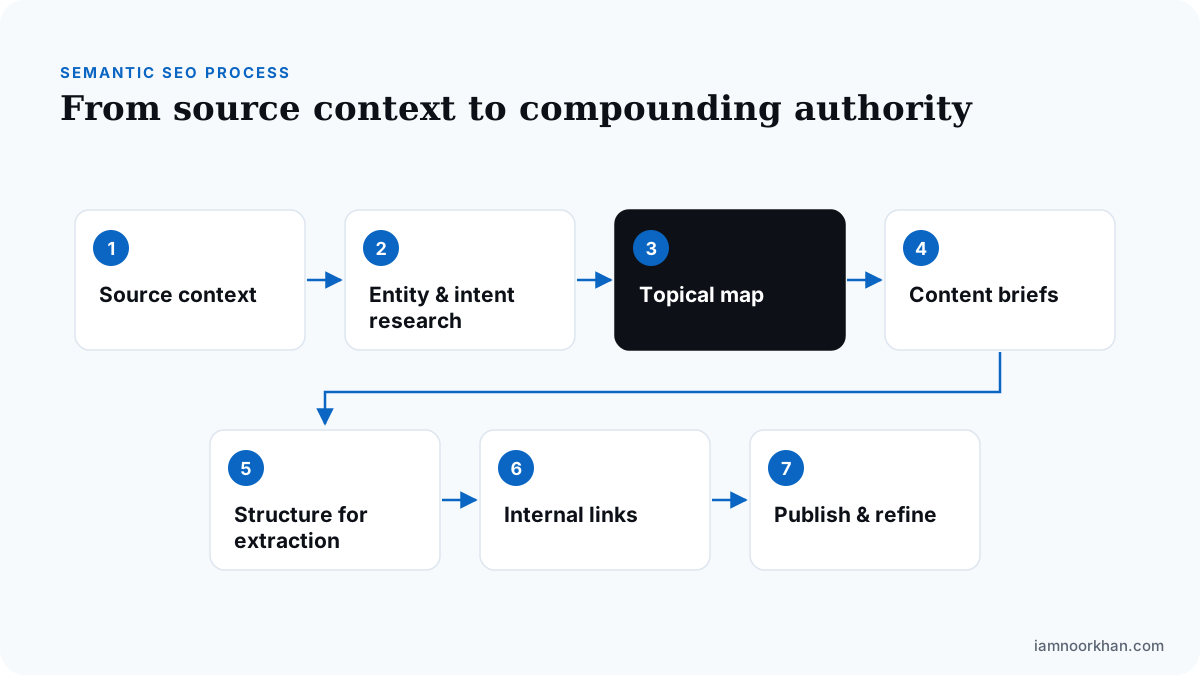
What the strategy covers
Positioning and source context
Before any content, we define your source context: what your business is, what it should be known for and from which angle you cover the topic. A clinic, a software vendor and an agency should all write about the same subject differently.
Entity and intent research
I study how your market searches and how Google models the topic: the core entities, their attributes, the questions people ask at each stage, and what the current results reward. This is where the gaps nobody in your market has claimed show up.
Topical authority roadmap
Research becomes a topical map: every subtopic your site needs, grouped into pages with one clear intent each, prioritized by how close they are to revenue.
Content architecture
Page types, URLs, navigation and internal linking are planned from the map, so search engines can follow the structure as easily as readers can.
How it works
- Discovery and analysis. Your site, your market and the competitive landscape, audited.
- Semantic research. Entities, intent and how search engines model your topic.
- Topical mapping. The complete map of what your site needs to cover.
- Content strategy. Semantic content briefs your writers can execute from.
- Implementation. On-page and technical SEO to match the strategy.
- Monitor and optimize. Rankings, conversions and how your brand appears in AI answers.
Who it's for
Businesses that have outgrown keyword-by-keyword SEO: healthcare and behavioral health providers, e-commerce brands and SaaS companies that need organic search to deliver qualified leads and sales, not just traffic. See how this applies in healthcare and behavioral health, e-commerce and SaaS.
Frequently asked questions
What is a semantic SEO strategy?
A semantic SEO strategy plans a website around the entities, topics and questions search engines associate with your market, instead of individual keywords. It defines what the site should be an authority on, which topics it must cover, and how pages connect, so the whole site is understood as a complete source.
How is semantic SEO different from traditional SEO?
Traditional SEO targets keywords and measures rankings page by page. Semantic SEO targets topics and entities and measures how completely the site covers them. Keyword-targeted content decays as competitors publish similar pages; semantically complete coverage compounds, because each page reinforces the others.
How long does semantic SEO take to work?
Leading indicators such as impressions, indexed pages and ranking movement usually appear within two to three months. Meaningful revenue impact usually lands between months four and eight, depending on your starting point and competition.
Do I need new content, or can you work with what I have?
Most engagements start with what you already have. An audit shows which pages underperform because of missing coverage or weak structure, and restructuring those is usually the fastest win before producing anything new.