Service
Topical maps and content briefs your team can actually execute
A topical map tells you every page your site needs to be seen as complete on your subject, in the order that matters for your business. Semantic content briefs turn each page into clear instructions, so writers produce content that ranks and gets cited, without guessing.
What you get
- A topical map of your subject: core and supporting topics, each a page with one clear intent.
- Prioritization by business value, so the pages closest to revenue come first.
- An internal linking plan built into the map.
- Semantic content briefs: intent, questions in order, entities to cover, structure, and required links.
- Working documents your team keeps. Not a keyword export.
Why most content plans don't build authority
Most content calendars are a list of keywords sorted by volume. That produces pages in whatever order ideas arrive, gaps search engines notice, and articles that compete with each other through keyword cannibalization. A topical map replaces that with a deliberate plan: every page has a job and a place.
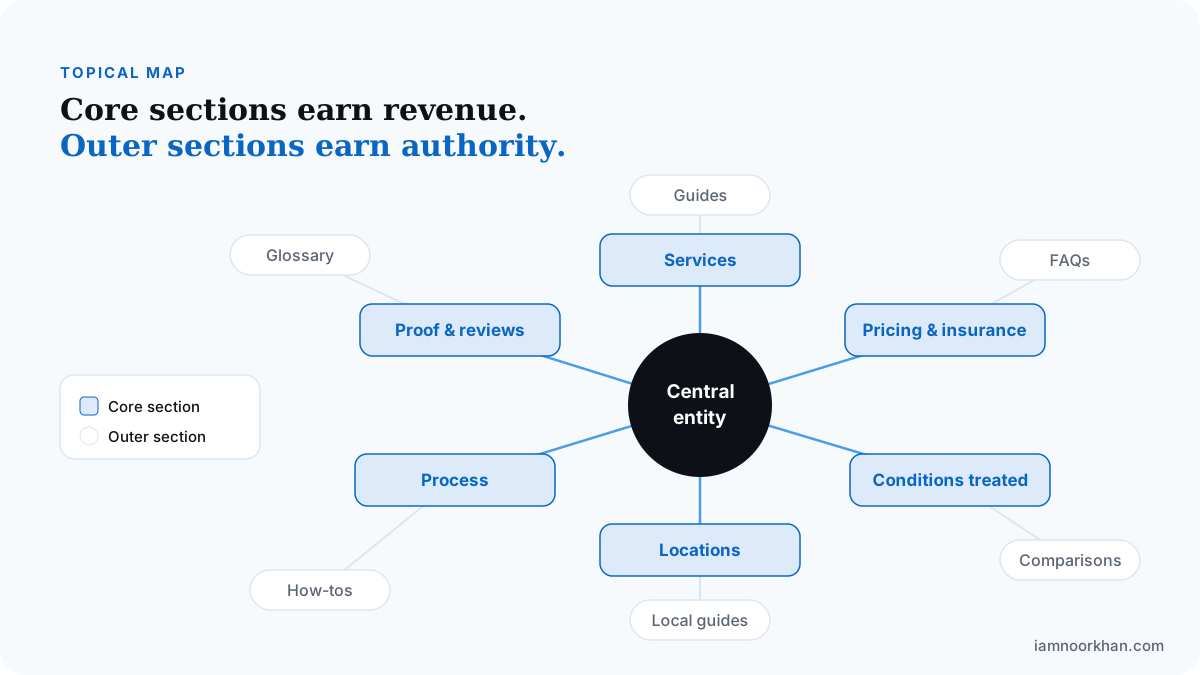
What a topical map gives you
- Completeness. Every subtopic search engines expect for your subject, so nothing important is missing.
- Priority. Core sections close to revenue first, supporting knowledge around them.
- Structure. The map becomes your URLs, navigation and internal links.
- Focus. One intent per page, so pages reinforce each other instead of competing.
What a semantic content brief gives your writers
A brief is where strategy becomes writing. Instead of "1,500 words on X", writers get the opening answer to lead with, the questions to cover in order, the entities and facts to include, where to use lists or tables, and which pages to link to. The result is content that's extractable by AI assistants and complete enough to rank.
How it works
- Research. Your business, audience, competitors and how search engines model the topic.
- Map. Core and outer sections, pages and intents, with priorities.
- Review. We walk through the map together and adjust it to your business goals.
- Briefs. Semantic content briefs for the priority pages, ready for your writers.
- Support. Optional review of drafts against the brief before they're published.
New to the concept? Start with what a topical map is and how topical authority works.
Frequently asked questions
What is included in a topical map?
A topical map defines the central entity and context of your site, every subtopic you need to cover, how those subtopics group into pages, the intent of each page, the order to publish them in, and how they link to each other.
How is a topical map different from keyword research?
Keyword research lists search terms and volumes. A topical map models how a subject is structured and what complete coverage looks like, then turns that into pages and links. Keywords inform it, but they don't define it.
What is in a semantic content brief?
Each brief sets the page's single intent, an answer-first opening, the questions to answer as headings in order, the entities and attributes to cover, format guidance such as lists and tables, sources to cite and the internal links the page must include.
Can my in-house team or agency write from your briefs?
Yes. That's the point of them. The briefs are written so any competent writer can produce a page that satisfies both the reader's intent and the topic's semantic requirements.