Healthcare SEO · Complete guide
Addiction Treatment SEO: How Rehab Centers Win Admissions from Search
The people searching for treatment are often frightened, exhausted and searching on behalf of someone they love. This guide shows how a rehab center earns their trust in search, honestly and within the rules.
 By Noor Khan
Key takeaways
- 48.4 million people aged 12+ in the US had a substance use disorder in 2024, and only 19.3% of people who needed treatment received it (SAMHSA NSDUH).
- Since 2017–2018, Google has limited rehab ads and required LegitScript certification, so organic and local search carry more weight for treatment centers.
- Addiction treatment is a YMYL topic: Google holds these pages to its highest standard of trust, so clinical review, licensing and accreditation belong on the page.
- Build one complete page for each level of care, each condition you treat, insurance and cost, admissions and families: these answer the questions people ask before they call.
- Measure qualified calls, insurance verifications and admissions, not traffic, and keep every growth tactic clear of patient-brokering rules such as EKRA.
Someone typing "alcohol detox near me" at 2 a.m. isn't browsing. Neither is the mother searching "how to get my son into rehab" from her car in a hospital parking lot. They are frightened, often exhausted, and they will call the provider they trust most. Addiction treatment SEO is the work of being that provider: visible when they search, and honest, clear and credible when they arrive.
Most of my healthcare work is in behavioral health. I've seen what works for treatment centers and, just as often, what quietly hurts them. This guide is everything I'd tell a rehab owner or marketing lead over coffee: the numbers that matter, the rules that shape this market, the pages your site needs, and a 90-day plan.
Addiction treatment by the numbers
The need for treatment is enormous, and most of it is still unmet. These are the figures I keep in mind when planning a treatment center's search strategy:
| Statistic | What it means for your site | Source |
|---|---|---|
| 48.4 million people aged 12+ (16.8%) had a substance use disorder in 2024 | A large population, many of whom have never spoken to a provider | SAMHSA, 2024 NSDUH (2025) |
| 19.3% (10.2 million) of people who needed substance use treatment received it | Roughly four in five people who need treatment don't get it | NACo summary of the 2024 NSDUH (2025) |
| ~16,000 substance use treatment facilities responded to SAMHSA's 2024 facility survey | Families are choosing between a lot of options | SAMHSA, 2024 N-SUMHSS Annual Report |
| ~7% of daily Google searches are health-related, about 70,000 a minute | People turn to search first with health questions | Becker's Hospital Review, quoting Google's David Feinberg (2019) |
According to SAMHSA's 2024 National Survey on Drug Use and Health, 48.4 million people aged 12 or older met the criteria for a substance use disorder. Among people classified as needing substance use treatment, only about 1 in 5 received it, as NACo's summary of the same survey reports.
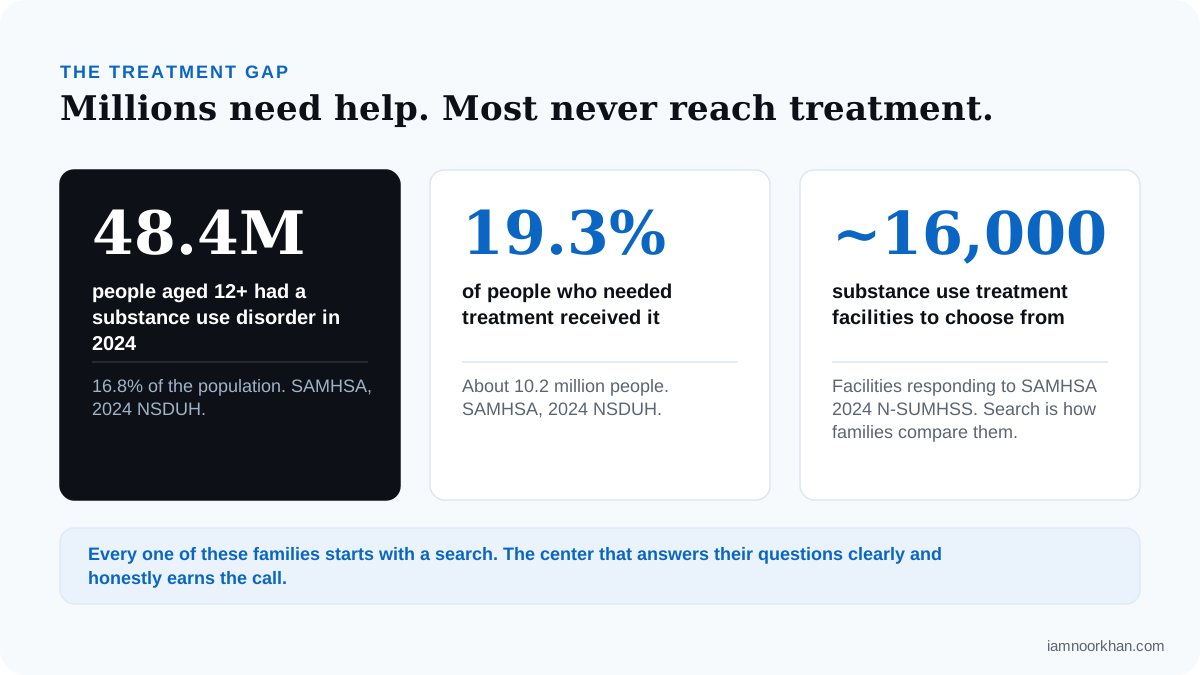
There are many reasons for that gap, including cost, stigma and access, and search won't fix most of them. But part of the gap is simply that people don't know where to start or who to trust. A clear, honest website can remove some of that fear. That is the part we can work on.
Why rehab SEO is different from other local SEO
Rehab SEO is different because Google treats addiction content as high-risk and the industry has a history of deceptive marketing. Both facts shape what works.
Google holds health content to its highest standard
Google's Search Quality Rater Guidelines describe "Your Money or Your Life" (YMYL) topics as those that "could significantly impact the health, financial stability, or safety of people, or the welfare or well-being of society." Detox, medication-assisted treatment and choosing a residential program are textbook examples.
For these pages, trust is the whole game. Raters are asked to look for E-E-A-T: experience, expertise, authoritativeness and, above all, trustworthiness. AI assistants are similarly careful about which health sources they cite. I've written a full guide to what that looks like in practice in E-E-A-T for healthcare websites, which is the companion to this article.
Paid search is restricted, so organic and local search matter more
In September 2017, Google stopped selling ads on a large number of rehab search terms after reporting exposed lead generators posing as neutral helplines, as The Intercept reported in 2017. In April 2018, Google's addiction services ads policy began requiring US treatment providers to be certified by LegitScript, and then by Google, before advertising. Sober homes and referral agencies aren't eligible for certification.
Later in 2018, Congress passed the Eliminating Kickbacks in Recovery Act (EKRA), which made paying or receiving money for patient referrals to treatment facilities a federal crime across all payers (Dorsey Health Law Blog, 2019).
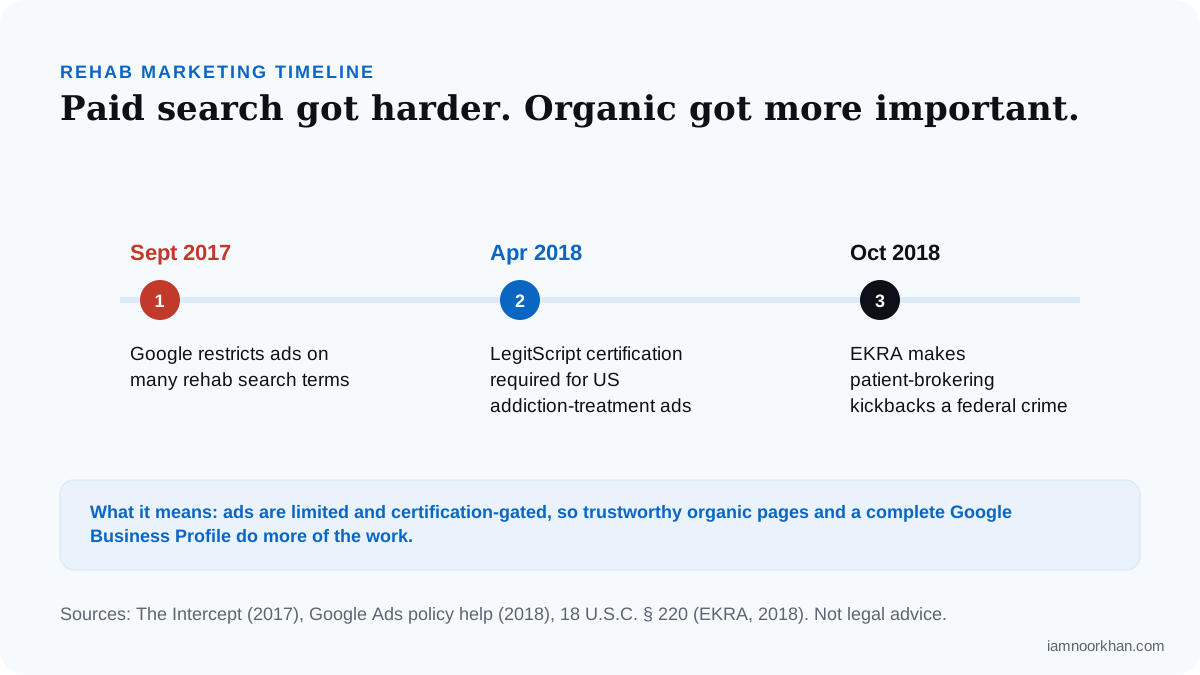
The practical effect: paid search is possible for certified providers but tightly controlled, and shortcuts that used to "work" now carry real risk. Organic search, your Google Business Profile and how AI assistants describe you have become the steadiest channels a legitimate center has.
The compliance guardrails (context, not legal advice)
I'm an SEO strategist, not a lawyer, and nothing in this section is legal advice. Please run your marketing arrangements past a healthcare attorney. That said, these are the lines I watch for in every treatment-center engagement:
- No paying for referrals, in any disguise. Under EKRA, a violation can bring a fine of up to $200,000, up to 10 years in prison, or both, per violation. Per-admission "SEO" deals and paid placements on "independent" helpline sites deserve a hard look. Many states have their own patient-brokering laws too.
- No sites that pretend to be neutral. A directory or "find rehab" site that secretly routes calls to one provider is exactly what triggered the 2017 crackdown. If you own a resource site, say so.
- Honest call routing. If calls go to a central admissions team rather than the facility, make that clear.
- No outcome guarantees. "95% success rate" claims without a defined, sourced methodology mislead people at their most vulnerable.
- Privacy-aware tracking. Ask your compliance advisor which analytics and advertising tags are appropriate on pages about health conditions.
Good SEO for rehabs doesn't need any of these shortcuts. It needs a site that deserves the call.
The site blueprint: pages a treatment center needs
A strong treatment-center site has one complete page for every way people search for care: by level of care, by condition, by payment question, by facility and by role (patient or family). I plan these from a topical map, and the process is in how to build a topical map. Here is the blueprint I start from:
| Section | Pages to build | The question each page answers | Next step on the page |
|---|---|---|---|
| Services and programs | One page per program (e.g. medication-assisted treatment, dual diagnosis, trauma-informed therapy, family program) | "What do you actually do, and is it right for me?" | Call or chat with admissions |
| Levels of care | Medical detox, residential, partial hospitalization (PHP), intensive outpatient (IOP), outpatient, aftercare and alumni | "What kind of care do I need, and what does a day look like?" | "Not sure which level? Talk to us" |
| What you treat | Alcohol, opioids and fentanyl, stimulants, benzodiazepines; co-occurring depression, anxiety, PTSD (only what you genuinely treat) | "Do they treat my situation?" | Link to the right level of care |
| Insurance and cost | Insurance overview, one page per major carrier you're in network with, cost and self-pay, financing | "Can we afford this?" | Verify insurance form |
| Admissions | How admission works, what to bring, what day one looks like, travel and arrival, what happens after you call | "What happens if I pick up the phone?" | Call, with hours and who answers |
| Family resources | How to tell if someone needs treatment, how to start the conversation, what if they refuse, visiting and contact rules, family therapy | "How do I help someone I love?" | Speak with a family coordinator |
| Facilities and team | One page per location, clinical team with credentials, licensing and accreditation, photos | "Are these people real and qualified?" | Directions, tour, call |
Each page has one clear search intent, answers its main question in the first sentence and links to the next logical step. Avoid near-identical city pages for towns you don't serve: they're doorway pages, and they rarely convert anyway.
Answer the questions people ask before they call
The pages that drive admissions are rarely the homepage. They're the ones that answer what families want to know before picking up the phone:
- Does my insurance cover this, and what will it cost us?
- How long does detox take, and is it safe?
- What happens on the first day?
- Can I visit? Can they keep their phone?
- What if they say no?
Answer each one plainly and early. Hiding insurance and cost behind "call us" doesn't create calls; it sends people back to the search results.
Worked example: rewriting an insurance page
Here's a before-and-after I use with clients (details changed). The "before" is typical of what I find on audits.
Before:
"At Serenity Ridge, we believe recovery should be accessible to everyone. We work with most major insurance providers. Contact our admissions team today to learn more about your options!"
After:
"Yes, we're in network with Aetna, Cigna and Blue Cross Blue Shield of Texas for detox, residential and IOP. Most in-network plans cover part of residential treatment after your deductible; your exact cost depends on your plan.
Verifying takes about 15 minutes. You'll need the member ID from the insurance card (the patient doesn't need to be on the call). We'll tell you what your plan covers, what you'd likely pay and whether pre-authorization is needed, with no obligation to admit.
Not in network or uninsured? See our self-pay rates and financing options, or ask us about lower-cost programs nearby."
What changed:
- The answer comes first. Named carriers and levels of care in the opening sentence, so a worried reader (or an AI assistant) gets the fact immediately.
- The process is demystified. How long it takes, what to have ready, what happens next.
- Fear is addressed. "No obligation" and "the patient doesn't need to be on the call" remove two big reasons families hesitate.
- There's a kind way out. People who can't afford you get a next step instead of a dead end. That honesty builds trust with everyone who reads the page.
Only state what is true for your center, keep the carrier list current, and have admissions review the copy.
Show clinical credibility on every page
Trust signals need to be visible on the page, not buried on an "About" page nobody reads. The checklist I use:
- Named clinical reviewers on medical content (for example an MD, psychiatric nurse practitioner or licensed clinical social worker), with credentials and a "reviewed on" date.
- State licensing shown on facility pages, with license numbers where your state allows it.
- Accreditation, linked to proof. The Joint Commission says it accredits more than 3,500 organizations under its behavioral health care manual and reviews each one at least every three years. If you hold Joint Commission or CARF accreditation, link to the accreditor's public lookup rather than just showing a badge.
- Real team pages with photos, roles and qualifications.
- Ownership and contact transparency: who owns the center, where it is, who answers the phone.
- Citations to authoritative sources (SAMHSA, NIDA, peer-reviewed research) for clinical claims.
- Honest outcomes language. Describe your approach; never promise results.
Accreditation isn't a confirmed Google ranking factor. It is, however, exactly the kind of evidence quality raters, AI assistants and frightened parents all look for.
Local search: Google Business Profile and location pages
Most admissions begin with a local or regional search, so each facility needs an accurate, complete Google Business Profile and a genuinely useful location page.
A few points specific to treatment centers, based on Google's Business Profile guidelines:
- One profile per real, staffed location. Don't create profiles for addresses where you don't provide care.
- Practitioner profiles are allowed, with conditions. Public-facing practitioners who can be contacted directly may have their own listings, and the name should include their title or degree (Dr., MD, DO). Google discourages multiple listings for one practitioner's different specialties.
- Departments can sometimes be listed separately within larger organizations such as hospitals. If you run a hospital-based program, check whether that applies.
- Consistency matters. Keep your name, address, phone and hours identical across your site, your profiles and directories.
Your location page should cover the programs offered at that site, how to get there (including airport transfers if you offer them), the local team, photos of the actual building and what visiting looks like.
AI search: how assistants decide which rehab to mention
AI assistants are increasingly asked questions like "What's a good residential rehab near Austin that takes Aetna?" They answer from pages that state those facts clearly and from what other trustworthy sites say about you.
That means:
- State levels of care, conditions treated, carriers accepted and locations in plain sentences, not only in images or dropdowns.
- Make passages self-contained, so a single paragraph makes sense if quoted alone.
- Use structured data for your organization, each location and medical reviewers on clinical content.
- Earn mentions from credible local and industry sources (local news, hospital partners, professional associations).
Peter Rota, who runs technical SEO at HUB International, told me on the podcast: "Get your most important content early, versus burying it in the middle of the page like people were doing five years ago." That's exactly what the insurance example above does. The full conversation is in what actually changes in AI search, and I go deeper in how to get recommended by ChatGPT.
Write for families, not just patients
Many searches come from parents, partners and adult children, and they ask different questions. How do I know if it's serious enough? How do I bring it up without pushing them away? What if they refuse? Can I visit? What does a family program involve?
A families section written with genuine care does two things. It helps people who may not be ready to call yet, and it often brings in some of the most motivated enquiries a center receives. Write it the way a kind, experienced family therapist would speak: no blame, no scare tactics, no fake urgency, and always a gentle next step.
If there is a risk of overdose or immediate harm, every page should make crisis options easy to find, such as calling 911 or the 988 Suicide & Crisis Lifeline. That isn't an SEO tactic. It's simply the right thing to do.
Technical foundations for treatment websites
Technical SEO on a rehab site is about speed, clarity and measurement:
- Fast, mobile-first pages. Many of these searches happen on phones, often late at night.
- Click-to-call on every page, with admissions hours and who answers.
- Call and form tracking so you know which pages start the journeys that end in admission.
- Clean location architecture: one strong page per facility.
- Indexing hygiene: no thin tag pages, duplicate program pages or old campaign landing pages competing with your real ones.
A full checklist is in what a good SEO audit includes.
A 90-day SEO plan for a treatment center
Ninety days is enough to fix the foundations, rebuild the pages closest to admissions and start the families section. This is the plan I'd follow:
| Weeks | Focus | Deliverables |
|---|---|---|
| 1–2 | Audit and compliance review | Indexing and page-coverage audit by level of care; Google Business Profile check for each site; how AI assistants currently describe the center; list of any risky referral or lead arrangements for your attorney |
| 3–4 | Topical map and tracking | Map of programs, conditions, payment and family questions; call tracking and conversion goals for calls, insurance verifications and forms |
| 5–8 | Core program pages | Level-of-care and condition pages rebuilt answer-first, clinically reviewed, with reviewer names, dates and clear next steps |
| 9–10 | Insurance, cost and admissions | Carrier pages, cost and self-pay page, step-by-step admissions and "what day one looks like" pages |
| 11–12 | Trust and local | Team and credentials pages, accreditation linked to proof, location pages and profiles refreshed |
| 13 | Families and review | First family-resource guides linked to admissions; review what moved and set the next quarter's priorities |
Measure what matters: admissions, not traffic
Traffic is a leading indicator. The real measures are qualified calls, insurance verifications and admissions that started from organic search.
Track calls and form submissions as conversions, and review monthly which pages start the journeys that end in admission. Expect impressions and query coverage to move first (usually within two to three months), with calls and admissions following, typically between months four and eight. Keep in mind that rankings don't cause admissions on their own; a page that ranks but doesn't answer the family's question won't produce a call.
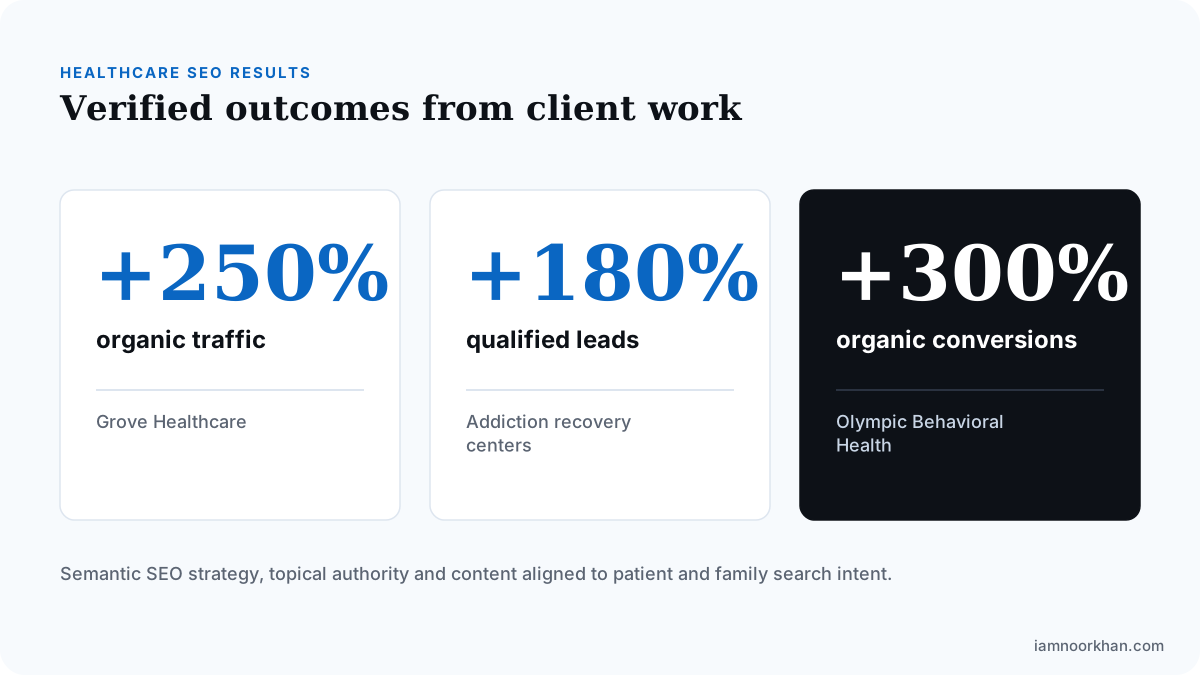
In my own work, Grove Healthcare saw +250% organic traffic, my work with addiction recovery centers produced +180% qualified leads, and Olympic Behavioral Health saw +300% organic conversions. Every market is different, and no honest SEO can guarantee rankings, but the approach behind those results is the one in this guide.
Where to start
If you take one thing from this guide, let it be this: the people searching for treatment deserve straight answers. Build the pages that give them those answers, prove you're a real and qualified provider, stay well clear of shortcuts, and search will reward you more steadily than any campaign.
If you run a treatment center and want to know where your visibility is breaking, that's what my healthcare and behavioral health SEO work focuses on. You can also ask for a free gap snapshot, and I'll show you the three biggest gaps between your site and the families looking for you.
Frequently asked questions
Can rehab centers advertise on Google?
In the United States, yes, but only after certification. Google's addiction services policy requires treatment providers to be certified by LegitScript (and then by Google) before running ads, and sober homes and referral agencies are not eligible. Check Google's current policy page before planning a campaign, because the details change.
What pages should an addiction treatment website have?
At minimum: a page for each level of care, pages for the substances and co-occurring conditions you treat, insurance and cost pages, an admissions page that explains what happens step by step, a page for each facility, clinical team pages and a section for families. Each page should answer one main question clearly and lead to a next step.
Why is addiction treatment considered a YMYL topic?
Google's Search Quality Rater Guidelines describe YMYL topics as those that could significantly impact people's health, financial stability or safety. Advice about detox, medications and choosing a treatment provider fits that description exactly, so pages are judged on trust: who wrote and reviewed them, and whether the provider is real, licensed and accountable.
Does Joint Commission or CARF accreditation help SEO?
Google has not said accreditation is a ranking factor. It is still one of the clearest trust signals a treatment center can show people and quality raters, and it helps AI assistants describe your center accurately. Display it where it is relevant and link to the accreditor's public verification page.
Are paid referrals or per-admission lead fees legal for rehabs?
This is a legal question, and nothing here is legal advice. Federal law (the Eliminating Kickbacks in Recovery Act of 2018) prohibits paying or receiving remuneration for patient referrals to clinical treatment facilities and recovery homes, across all payers, and many states have their own patient-brokering laws. Review any marketing arrangement that pays for referrals or admissions with a healthcare attorney.
How long does SEO take for an addiction treatment center?
Leading indicators such as impressions and the number of queries your pages appear for usually move within two to three months. Meaningful impact on qualified calls and admissions usually lands between months four and eight, depending on how competitive your market is and how much of your topic the site already covers.
Keep reading
 AI Search
How to Get Your Business Recommended by ChatGPT and AI Assistants
If you've watched competitors get named by ChatGPT while your business doesn't come up, you're not doing anything wrong. You just can't see how these answers get put together yet. This guide shows you how they work and what you can actually control.
· 12 min read
AI Search
How to Get Your Business Recommended by ChatGPT and AI Assistants
If you've watched competitors get named by ChatGPT while your business doesn't come up, you're not doing anything wrong. You just can't see how these answers get put together yet. This guide shows you how they work and what you can actually control.
· 12 min read
 Technical SEO
What Does an SEO Audit Include? (And What to Ignore)
If you've been handed a 200-line audit and still don't know what to fix first, you're not alone. Here's what a useful audit covers, what it can safely skip, and how to tell a real audit from a crawler export.
· 11 min read
Technical SEO
What Does an SEO Audit Include? (And What to Ignore)
If you've been handed a 200-line audit and still don't know what to fix first, you're not alone. Here's what a useful audit covers, what it can safely skip, and how to tell a real audit from a crawler export.
· 11 min read